
How Arrest Warrants Work in Powhatan County
Virginia law gives a magistrate, a judge, or another authorized court officer the power to issue arrest process, each within a defined role. The review starts with sworn information. The officer weighs it against the probable-cause standard. A felony complaint has to be in writing. When probable cause holds up, the resulting order names the person or gives a description solid enough to identify them, states the offense, and directs an officer to bring that person before the proper court. In Powhatan County, the practical issuance points are the magistrates, General District Court, Juvenile and Domestic Relations Court where it applies, and Circuit Court for felony process. The warrant record stays with the court handling the case; the sheriff's part is service and routing. A public case search can list a charge or hearing yet never show the warrant itself, so identify the issuing authority first, then ask whether the paper is a warrant, summons, capias, or another order, and which office can confirm its current status.
Powhatan County Arrest Warrant Issuance
The process begins when a complainant or an officer presents facts under oath. A magistrate then weighs that sworn information against the probable-cause standard before signing a warrant or some other form of process. Virginia Code §§ 19.2-71 and 19.2-72 spell out who may issue process and what a warrant must contain. In Powhatan County, the magistrate contact published by the Sheriff's Office is a routing number, not a public warrant lookup. A private felony complaint adds a step. State law routes it through law enforcement or the Commonwealth's Attorney for authorization, and the exact case path depends on the charge and the court, so treat the magistrate's public phone number as a way to ask questions rather than an online status system. Read the probable-cause and warrant-contents rule.
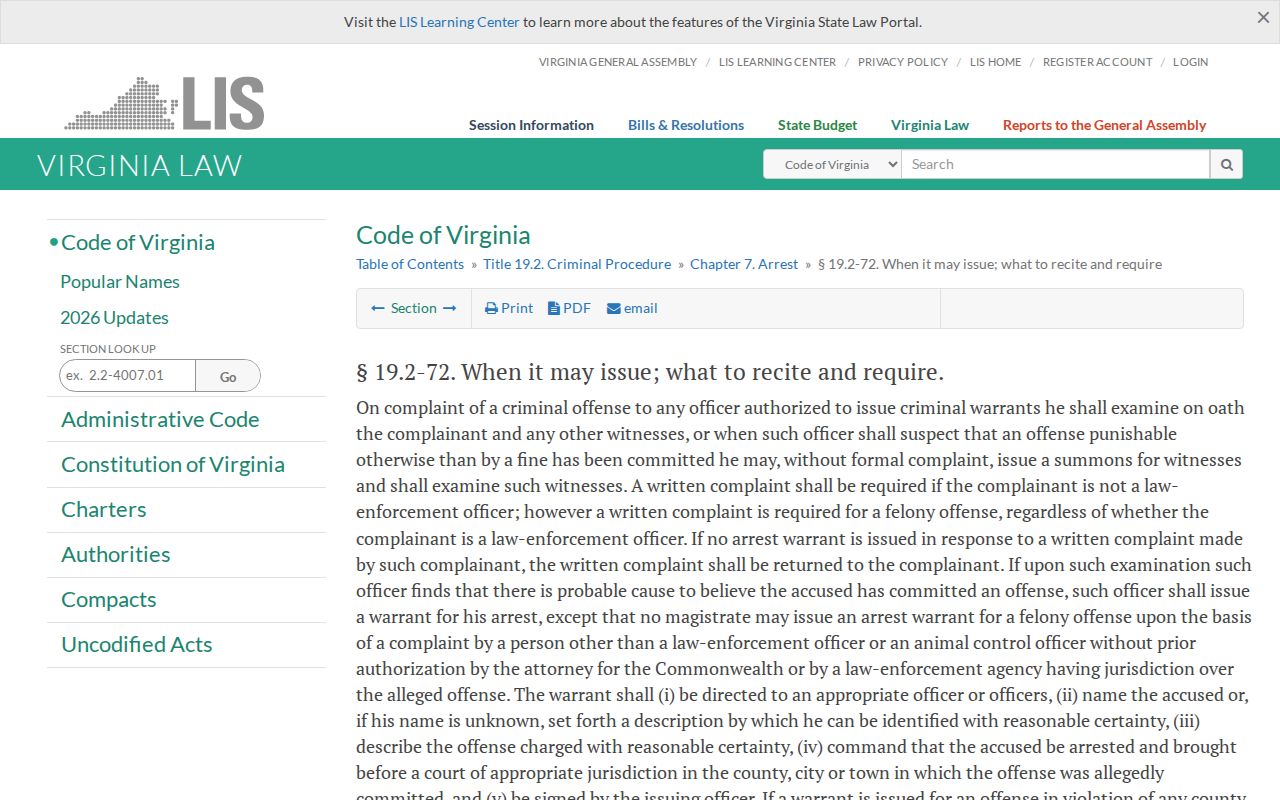
The cited statute is statewide guidance, not a local warrant sample.
Powhatan County Arrest Warrant Contents
Virginia's statute demands enough detail to identify both the person and the offense. It names the officer directed to execute the process. It also carries the issuing authority's signature. Powhatan County publishes no sample warrant and states no warrant-number format. The table here covers common process fields without presenting them as a live local record.
| Case or process number | Connects the warrant to a court file; the local public format was not found. |
|---|---|
| Person description | Name or identifying description sufficient to identify the person. |
| Offense | Describes the alleged offense with reasonable certainty. |
| Issuing authority | Shows which court or magistrate can confirm the process. |
| Directed officer | Identifies the officer or officers authorized to execute it. |
| Bond and return | May be recorded separately; ask the clerk or magistrate for current terms. |
A docket can show the offense and the case yet hide the affidavit, a sealed order, the service return, or a later recall. Powhatan County sets no public example of a standard warrant number. The case number on the court paper is the safer reference. Give that to the clerk when you call.
Powhatan County Arrest Warrant Indictments
A Circuit Court can seal a felony indictment until the defendant is arrested. So a public case search may look quiet even while the court has acted. Juvenile records and some investigative material face access limits too. Treat a missing result as a coverage gap, not a status certification. For a possible Circuit case in Powhatan County, ask the Circuit Clerk how to confirm your own file, since a sealed record may not come out through a general request. The state case-search help page notes that Circuit availability varies by locality. Virginia Code § 19.2-192.1 addresses sealed indictments.
How Warrants Get Served in Powhatan County
The Powhatan Sheriff's Office serves as the county's primary service and court-services agency. State law also lets other authorized Virginia officers execute process within their jurisdiction, and a jail officer may act when a person is held there. Once process is executed, the officer endorses the date and returns the warrant to the judicial officer. The court record and the service return can update at different times, so one may lag behind the other. The Sheriff's Office lists 804-598-5652 for general information and 804-598-5656 for non-emergency routing. It runs no dedicated warrant desk, public roster, surrender hours, or jail bond counter. And a return marked "not found" is not the same as a court recall.
Powhatan County Warrant Service and Returns
Service details live in different places. The Sheriff's Office may hold the service return, transport, or court-security information, while the Circuit or district clerk keeps the underlying case file and can confirm the court's legal status. An officer returning process as not found is not a judge recalling it, so ask which record each office can actually confirm. Virginia Code § 19.2-76 covers execution and return, and the official Sheriff's page gives the public contact route. A warrant or capias is executed by arrest; a summons is served by delivery and returned to the court.
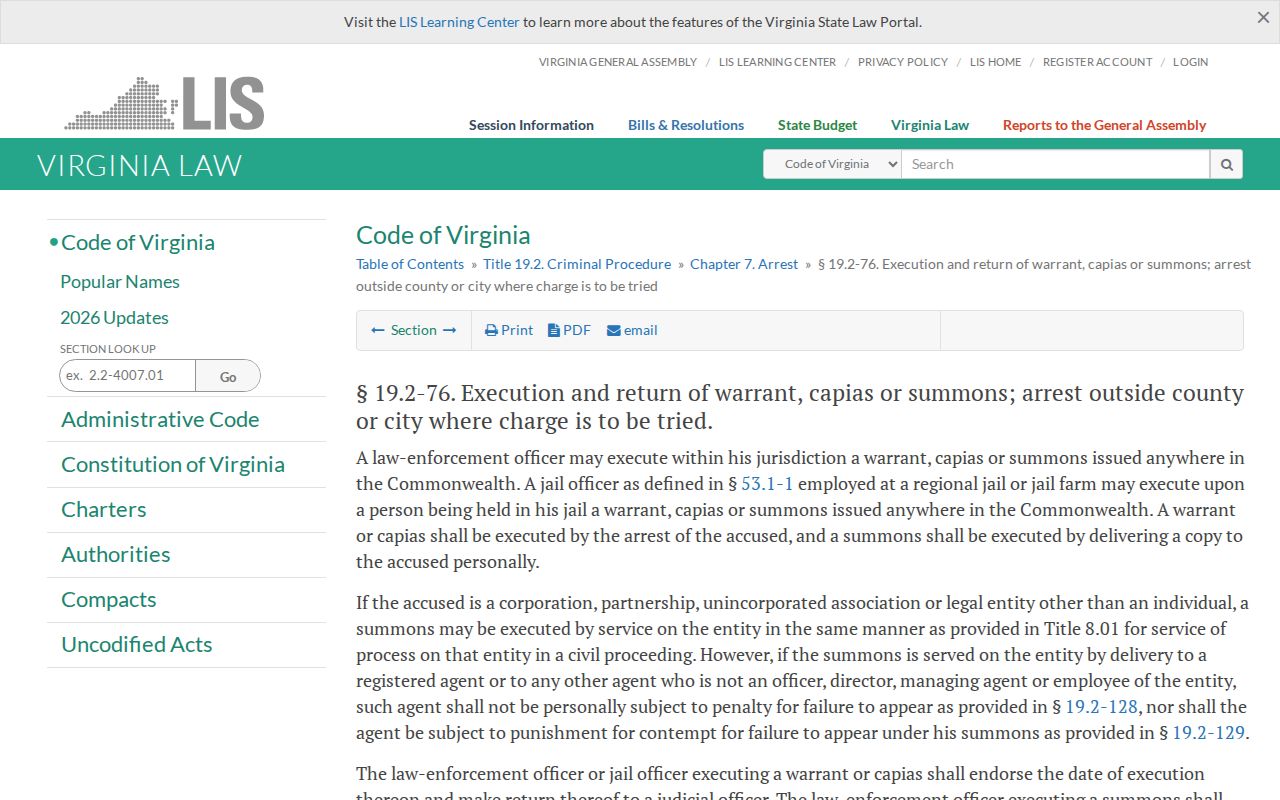
The execution rule does not establish whether process was recalled.
Powhatan County Warrant Types Compared
An arrest warrant tells an officer to take a person into custody after a probable-cause review. A summons orders an appearance without an immediate arrest. A bench or FTA warrant follows a missed court duty or a release condition in an existing case. The right response in Powhatan County depends on the paper and the issuing court. See the Powhatan bench-warrant process for missed-date guidance.
| Feature | Arrest Warrant | Summons | Bench Warrant |
|---|---|---|---|
| What it orders | Arrest and appearance before the proper court | Appearance on a stated date | Arrest or appearance after a court failure |
| Basis | Probable cause of an offense | Process directing a person to appear | Missed appearance or court condition |
| Who issues | Authorized judge or magistrate | Court or officer under law | Court handling the existing case |
| How to respond | Confirm process, counsel, release terms | Appear as directed | Ask the clerk about recall or a new setting |
A summons sets a future appearance without authorizing arrest on the spot. Bench process usually grows out of a case already open in Powhatan County. A new arrest warrant starts with a probable-cause review instead. Those differences decide which clerk or magistrate should field your next question.
Powhatan County Felony Warrant Capias Process
In Powhatan County, a capias is arrest process, not a catch-all label for every warrant. Virginia Code § 19.2-232 makes a capias the standard step after a felony indictment. For an imprisonable misdemeanor, the court may choose a capias or a summons. Fine enforcement runs on a different track. Unpaid fines and costs can bring a capias pro fine under § 19.2-352. So read the case type. Ask the clerk which document was issued. A docket label alone may not show service or recall, and a fine payment agreement does not by itself withdraw separate arrest process. The capias statute sets out the felony-indictment rule.
Handling a Powhatan Arrest Warrant
Your first call should go to the clerk or magistrate who issued the Powhatan County process. Ask what the document requires of you. The Circuit Clerk answers at 804-598-5660, and the combined GDC/JDR clerk uses 804-598-5665. The Sheriff's Office can route service questions. Powhatan County publishes no public bond schedule, recall form, or walk-through procedure, so ask directly whether counsel should arrange an appearance, whether bond applies, and where you should report. Follow what the court tells you. Bond is not the case outcome. If a judicial officer allows surety, verify the amount and the accepted process first. If an appearance is required, confirm the time and the right courthouse counter.
Important: Consult a lawyer before surrender or bond arrangements; verify the reporting office, hours, release terms, and next court date.
Virginia's DCJS bondsman page describes the licensed surety categories. Use a bondsman in Powhatan County only if the judicial officer permits that form of bond.
Powhatan County Arrest Warrant Next Steps
Posting bond changes custody, not the charge. If a warrant was issued, ask what the Powhatan County court needs to recall it: an appearance, a motion, a surrender, or some other step. Keep the order or receipt. Then ask when the clerk and the serving agency will update their records. A payment alone may not clear separate process. Federal cases work differently. Virginia OCIS and the Powhatan clerks cannot certify a federal matter, so contact counsel or the Richmond Division of the Eastern District of Virginia and keep federal process apart from county records. The Richmond federal courthouse page identifies the local federal court. For surety questions, the Virginia DCJS bondsman page lists state licensing categories and explains the regulated providers.
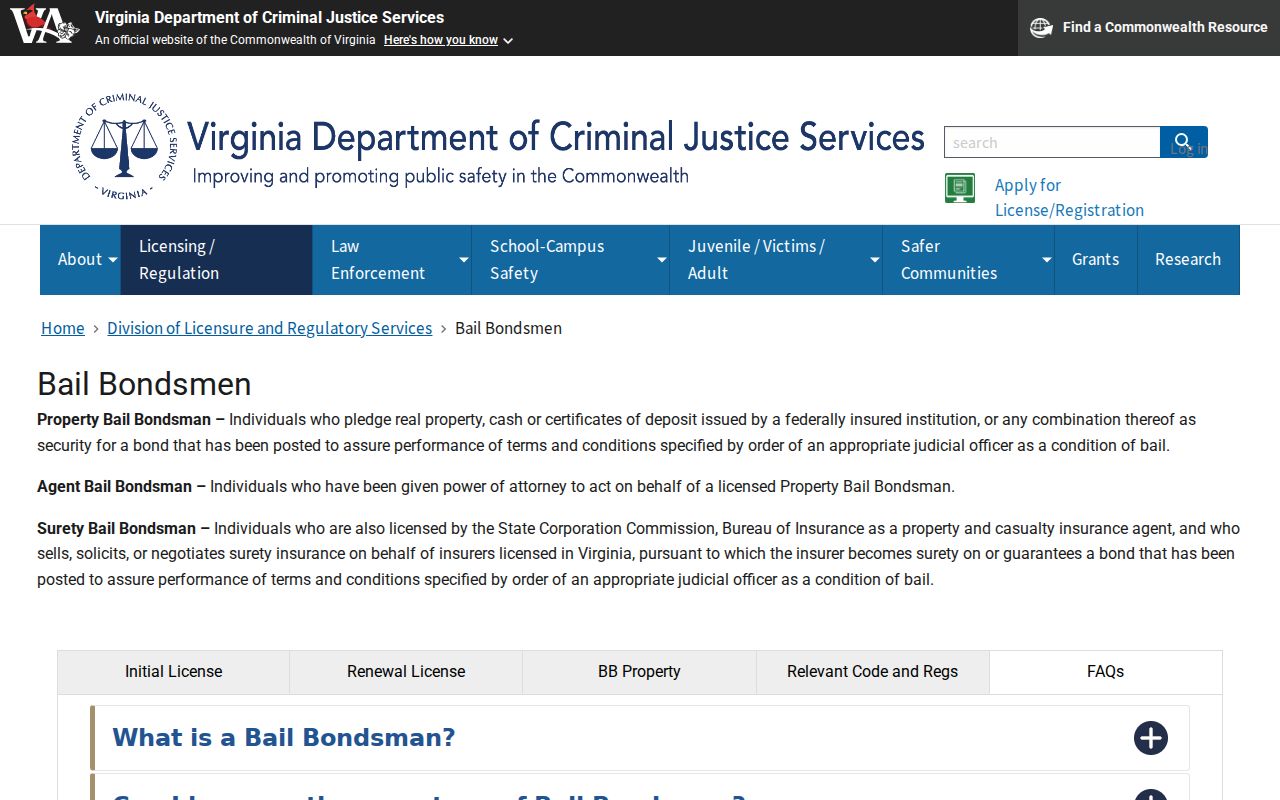
That link goes to a state licensing source, not an endorsement of any private bond company serving Powhatan County.
Powhatan County Arrest Warrant Contacts
The Circuit felony clerk answers at 804-598-5660. The office sits in Suite C at 3880 Old Buckingham Road, open 8:30 a.m. to 5 p.m. The combined GDC/JDR clerk is at 804-598-5665, 3880-D Old Buckingham Road, with hours of 8 a.m. to 4 p.m. For initial process routing, the magistrate number is 804-598-6057. The Sheriff's Office, in Suite A, lists 804-598-5652. Non-emergency Communications is 804-598-5656. Powhatan County does not name a dedicated warrant desk or surrender window, so call ahead and ask where to report before you travel.